

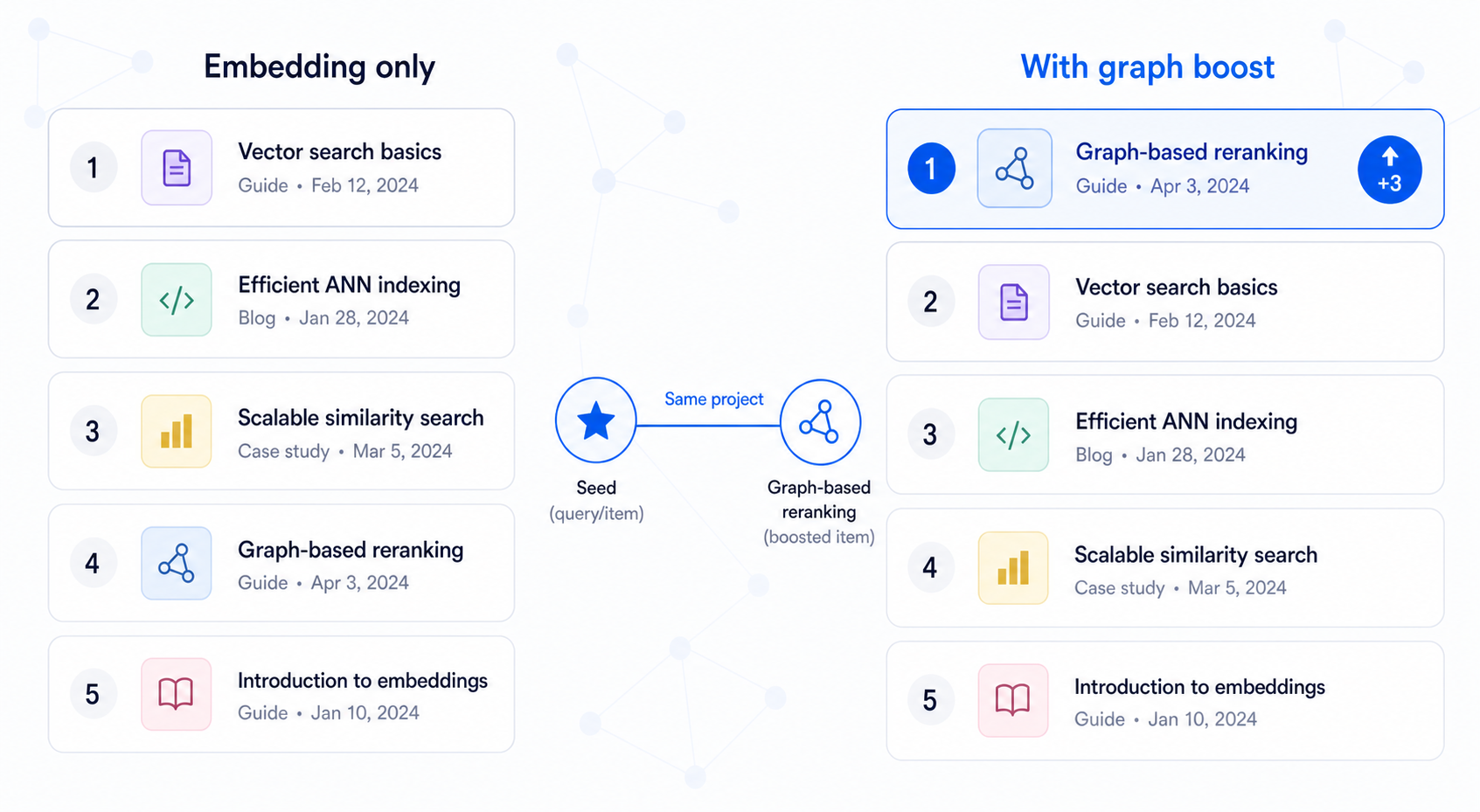
Using the graph as a ranking signal
Instead of filtering by the graph, you can use it to boost items that are graph-neighbours of the seed. Items that are both semantically similar AND closely connected rank higher.
Pattern: boost tickets that share tags with the seed
var sharedTags = Q().StartAt(seedUID)
                    .Out("HasTag")
                    .AsUIDEnumerable()
                    .ToArray();

var results = await Graph.Query()
    .StartAt(seedUID)
    .ToSimilarity()
    .AddSignal("embedding", s => s.StartAtSimilarTextAsync(bodyText, 20, ["Ticket"]))
    .AddSignal("shared-tags", s => s.StartAt(sharedTags).In("HasTag").Distinct())
    .Fuse(f => f.UsingMeanReciprocalRank(
        ("embedding",   weight: 0.7),
        ("shared-tags", weight: 0.3)))
    .ExecuteAsync(ct);
Interpreting results:
foreach (var r in results.Scores)
{
    var embScore  = results.Signals["embedding"][r.UID];
    var graphScore = results.Signals["shared-tags"][r.UID];
}
The Signals breakdown shows each signal's contribution — useful for explaining recommendations to users and for debugging.